

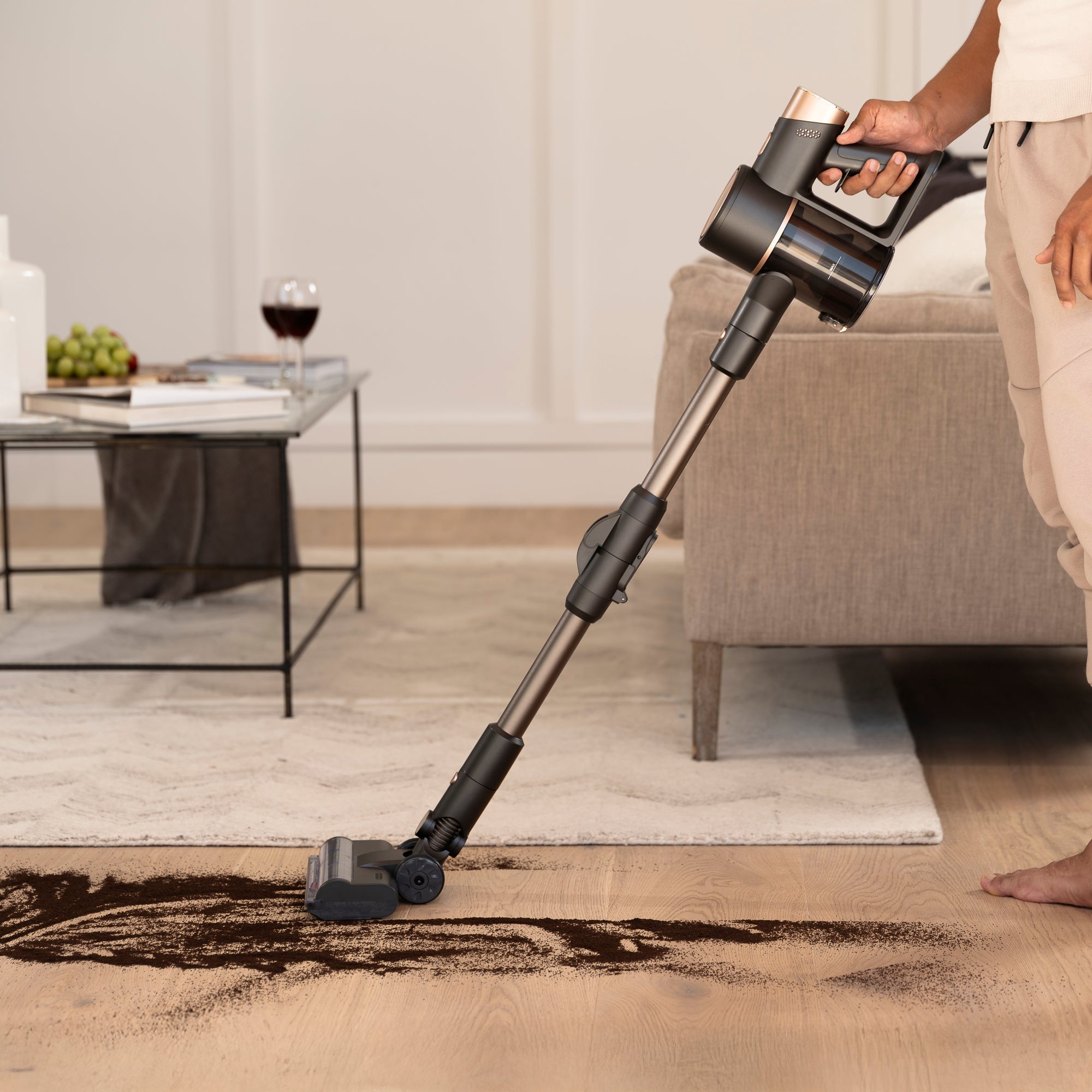
Corded vacuums tie you to the nearest outlet, then fight you around every chair leg and up every stair. A cordless vacuum cuts the cord and the hassle: grab it off the wall, clean the spill, drop it back on the dock. This guide walks you through how to choose a cordless vacuum in 2026, the specs that actually matter, and where to start if you want one machine that handles daily mess without the weight.
A cordless vacuum is a battery-powered stick vacuum you run untethered, usually 20 to 60 minutes per charge depending on the model and suction mode. The best cordless vacuum for you comes down to four things: runtime, suction power, filtration, and weight. Get those right and you have a vacuum you actually reach for, not one that lives in the closet.
How to choose a cordless vacuum
Five things decide whether a cordless vacuum earns its spot on your wall. Sort these before you shop.
- Runtime. Most cordless sticks run 20 to 60 minutes per charge. A one-bedroom apartment needs 20 to 30 minutes. A multi-floor house wants 40-plus, or a swappable battery. Watch the fine print: top suction mode drains the battery two to three times faster than the standard setting, so the headline number is the floor, not the average.
- Suction power. Suction is what pulls embedded dirt out of a rug instead of skating over it. Two suction modes cover most homes: a quieter standard mode for floors and a boost mode for ground-in pet hair and high-traffic carpet.
- Filtration. If anyone in the house has allergies, filtration matters as much as suction. A true HEPA filter captures 99.97% of particles down to 0.3 microns, the dust, pollen, and dander that a basic filter blows right back into the room.
- Weight and balance. A cordless vacuum lives or dies on weight. Anything you carry up the stairs and hold overhead to do drapes should feel light in the hand. A foldable or bendable handle helps you reach under the couch without crouching.
- Versatility. The point of cordless is one tool for many jobs. Look for detachable parts that convert the stick into a handheld for the car, the stairs, and the sofa cushions, plus an LED display so you can see mode and battery at a glance.
One note that saves regret later: most cordless vacuums are bagless, which means you empty a dust bin instead of buying bags. That is cheaper over time, but it also means the filter does real work. Plan to maintain it (more on that below).
Cordless vs corded: which makes sense
The trade is convenience against raw endurance. Here is the honest version.
Choose cordless if you want grab-and-go cleaning, you live in an apartment or a single-level home, you clean in short bursts, or you hate wrestling a cord around furniture. Cordless wins on quick spills, stairs, car interiors, and daily pet-hair patrol.
Stay corded if you vacuum a large multi-floor house in one long session and never want to think about battery life. Corded vacuums run forever and tend to cost less per unit of suction.
For most homes the math now favors cordless. Battery and motor tech have closed most of the old suction gap, and the freedom to clean a single room without hunting for an outlet is the feature people use every day.
Cordless stick vacuum: the everyday workhorse
The stick format is the default cordless vacuum for a reason. It stands tall for floor cleaning, breaks down into a handheld for everything off the floor, and docks on the wall so it is always charged and never in a closet.

The Kissair Cordless Vacuum Cleaner is a clean example of the everyday stick done right. It pairs a lightweight body with two suction modes, so you run quiet on hard floors and switch to boost for carpet and pet hair. An LED display shows mode and battery, a rechargeable battery keeps it untethered, and a foldable handle bends to reach under low furniture without you bending with it. Detachable parts turn it into a handheld for the stairs and the car, and a HEPA filter keeps fine dust and dander out of the air you breathe. At around $70, it covers daily cleaning for an apartment or a single-level home without the four-figure price of a flagship stick.
Best cordless vacuum for apartments and small spaces
Small space, less storage, same dust. In an apartment a cordless vacuum is almost always the right call: no closet full of cord to manage, a wall dock that doubles as storage, and a handheld mode for the one-room jobs that make up most apartment cleaning.
Prioritize three things in a small home:
- A small footprint and a wall dock, so the vacuum stores itself instead of eating a closet.
- 20 to 30 minutes of runtime, plenty for a one or two-bedroom layout on a single charge.
- Handheld conversion, for the kitchen counters, the couch, and the car downstairs.
Setting up a first apartment or a dorm? A cordless stick pairs naturally with the rest of a small-space kit. See our guide to appliances for apartments and dorms for the full small-space setup, then add a cordless vacuum to keep it clean.
Best cordless vacuum for pet hair
Pet hair is the real test of a cordless vacuum. Fur weaves into carpet and clings to upholstery, so you need two things: a boost suction mode that pulls embedded hair out of the rug, and a handheld mode for the couch, the stairs, and the back seat where pets actually shed.
Filtration matters double in a pet home. Dander is a top household allergen, and a true HEPA filter traps it instead of recirculating it. Run boost mode on high-traffic carpet, switch to standard for hard floors to save battery, and empty the bin after each pet-hair session so suction stays strong.
Keep your cordless vacuum running strong
A bagless cordless vacuum is low-maintenance, not no-maintenance. The dust bin and filter do the work that bags used to, so a little upkeep keeps suction at full strength.
- Empty the bin after every few uses, or after any heavy pet-hair session. A full bin chokes suction faster than a worn motor.
- Clean the filter on a schedule. Tap a washable filter clean over the trash, and if yours rinses, wash it in lukewarm water with no detergent and let it air-dry fully, around 24 hours, before it goes back in. A damp filter breeds odor and cuts airflow.
- Replace the HEPA filter on the maker's timeline. In a normal home that runs roughly every 6 to 12 months with regular use, sooner in a heavy pet or allergy household. Filter-life guidance varies by model, so check your manual.
- Clear the brush roll. Hair wraps the roller and stalls it. Cut it free every few weeks so the brush keeps agitating the carpet.
Do that and a good cordless vacuum holds its suction for years instead of fading after one season.
Find your cordless vacuum
The right cordless vacuum is the one that matches your home: 20 to 30 minutes of runtime and a handheld mode for an apartment, more runtime and strong boost suction for a multi-floor or pet household, and a true HEPA filter for anyone with allergies. Nail runtime, suction, filtration, and weight, and you have a vacuum that lives on the wall and gets used every day.

Ready to choose? Browse the full cordless vacuum cleaner collection and match the machine to your floors, your storage, and your cleaning routine.


