

It's 7am and you want caffeine. The only real question is whether you want it in three sips or over twenty minutes, and that's the fork that decides which machine ends up on your counter.
Start with the thing most people have backwards: espresso isn't a bean, and it isn't a roast. It's a way of brewing, named for the method rather than the ingredient. Take the same beans you'd load into a drip machine, grind them finer, force hot water through them under pressure for about 25 seconds, and you've made espresso. Grind them coarser, let gravity do the work over four minutes, and you've made coffee. Taste, caffeine, and the machine you should buy all trace back to that one fork.
What actually changes between a shot and a cup
Three things, and that's it.
- The grind. Espresso wants a fine grind, roughly the texture of table salt. Packed tight, the grounds fight the water, which is the entire point. Drip uses a medium grind and lets the water slip through.
- The pressure. The real divider. An espresso machine pushes water through that packed puck at about 9 bars, nine times atmospheric pressure. A drip machine has gravity and nothing else. That force strips the oils out fast and builds crema, the tan foam sitting on a fresh shot.
- The water. A shot runs about an ounce of water through 7 to 9 grams of coffee in 20 to 30 seconds. A mug pushes 8 ounces through a similar dose, slowly. Ten times the water, same beans.
Concentration, then, is really a plumbing decision. Espresso tastes intense because there's barely any water in it.
Espresso vs coffee caffeine
Per ounce, it isn't close. A one ounce shot carries about 63mg of caffeine. Brewed coffee sits somewhere around 12 to 16mg per ounce. USDA's figures say the same thing from the other direction: 212mg per 100 grams of espresso against 40mg for brewed. Espresso is more than five times as concentrated.
Per cup, drip takes it back. Nobody drinks eight ounces of espresso. A standard mug of drip lands near 95mg, while a single shot gives you 63mg. Bigger vessel, more caffeine in it.
Then a double flips it again. Two ounces of espresso comes in around 125mg, comfortably clearing the mug. That's your number if you've ever wondered what a doppio actually delivers, and it's why one hits harder than a full cup while looking like so much less.
Which means "stronger" is quietly doing two jobs in that sentence. Espresso is stronger in concentration, always. Whether it puts more caffeine in you depends on how much of it you pour.
Which one tastes like what
Espresso arrives thick and short and doesn't hang around. The water never passes through a paper filter, so the oils stay in, and that's where the syrupy body comes from. Flavors land all at once. It suits a fast morning, and it's the base of anything with milk in it.
Drip has the opposite temperament. The filter catches most of those oils, so the cup comes out lighter and cleaner, and you can sit with it for half an hour without tiring of it. It also scales: one pot, four people, no second thought.
Plenty of kitchens end up with both, and that isn't a cop out.
Espresso vs cold brew
These two sit at opposite ends of the same idea. Espresso is the fastest brew there is: heat, pressure, thirty seconds. Cold brew is the slowest, with coarse grounds sitting in cold water for 12 to 24 hours and no heat or pressure anywhere in the process.
That long soak leaves most of the acid behind, which is why cold brew tastes rounder and sweeter, and why it's easier on a sensitive stomach. The tradeoff is obvious enough. One takes half a minute, the other takes a day of planning. Cold brew also gets served long, over ice and cut with milk or water, so a finished glass usually carries plenty of caffeine on volume alone.
Espresso vs cappuccino, latte, and americano
Worth clearing this up, because it changes what you should buy. A cappuccino is espresso. So is a latte, a macchiato, an americano. They're all espresso with something added.
- Cappuccino. A shot, steamed milk, and a thick lid of foam, in rough thirds.
- Latte. A shot or two under considerably more steamed milk, with only a thin layer of foam. Milkier, mellower.
- Americano. A shot with hot water in it. Drinks like drip, keeps espresso's body.
- Macchiato. A shot "marked" with a spoonful of foam. Barely diluted at all.
So the machine question was never espresso versus coffee. An espresso machine with a steam wand makes all four of those, plus the shot itself. A drip machine makes drip.
Which machine should you buy
What bar ratings actually mean
Espresso machines get sold on pressure. 15 bar, 20 bar, bigger numbers on bigger boxes. It's worth knowing what that number is, because it isn't what most people assume.
It's the pump's ceiling, not the pressure that reaches your coffee. Espresso extracts at around 9 bars, and machines fit a valve that bleeds off the rest before the water ever touches the grounds. A 20 bar pump does not push 20 bars through a puck. More bars doesn't mean better espresso, and anyone telling you otherwise is working an angle.
What a strong pump does buy you is margin. A machine that can generate well past 9 bars will hold a steady 9 under load, and keep holding it as the pump ages, instead of wheezing up toward the number and falling short. That's worth paying for. It just isn't what the label implies.
Go espresso if
You drink short and strong. You want cappuccinos and lattes at home instead of paying four dollars a go for them. You don't mind a little ritual before the day starts.

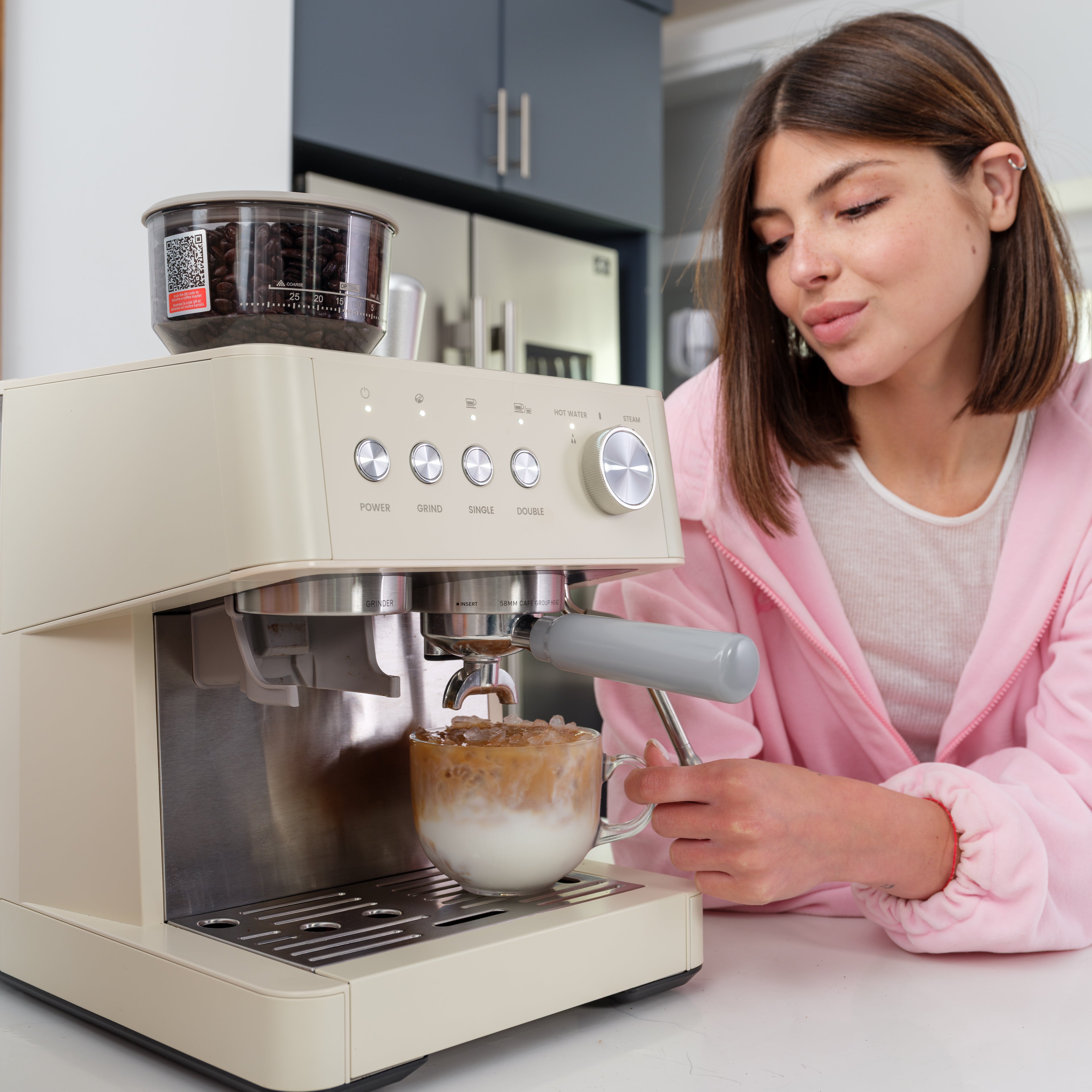
The Kismile 20-Bar Espresso Machine runs $99.99 and covers the format without fuss. Its 1350W thermoblock gets to temperature fast and holds it there, which will do more for your shot than any figure printed on the front. One-touch controls handle single and double shots, a pre-brew cycle wets the puck so the extraction runs evenly, and the steam wand pulls the microfoam that turns a shot into an actual cappuccino. There's a 1.2L removable tank and a cup warmer on top. Compare formats across the espresso machine collection.
Go drip if
You drink by the mug. You want a pot going while you get ready, and you want one button to start it.
Drip has quietly gotten good. The Kismile 8 Cup Drip Coffee Maker brews between 198 and 205°F, the Golden Cup window, and holding that temperature does more to separate a rounded cup from a flat one than anything else on the spec sheet. It'll also run a 30 minute deep immersion cold brew cycle, so the cold brew section above stops being hypothetical. Magnetic drip-stop, 40 minute keep-warm, dishwasher-safe parts, $179.99. The rest of the range sits in the coffee maker collection.
Weighing pods against a full pot instead? Single serve vs drip takes that fork apart.
Picking one
Same plant, same bean, same drink. Change the grind, add 9 bars of pressure, cut the water to a tenth, and you get a syrupy shot instead of a mellow mug. That's the whole difference.

Espresso if you want intensity and milk drinks. Drip if you want volume and a slower morning. Either way, spend your attention on temperature stability rather than the bar rating on the box, because temperature is what actually shows up in the cup.
Browse the coffee and espresso collection and pick the one that matches how you actually drink coffee.


