

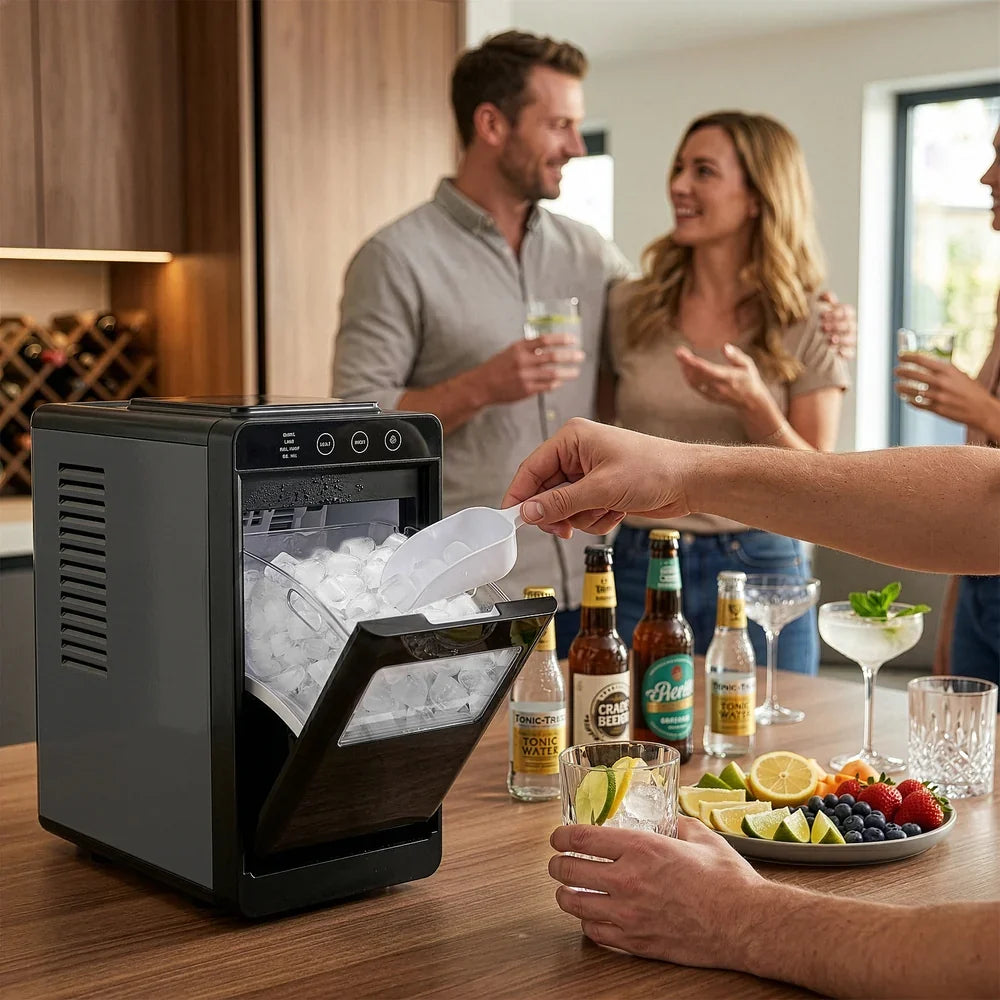
A portable ice maker earns its counter space fast. Then, a few weeks in, the ice starts tasting faintly like plastic, or the reservoir grows a cloudy film, or a batch that used to take 8 minutes starts taking 15. None of that means the machine is failing. It means the water sitting in the reservoir between batches has had time to do what standing water always does.
Here's the short version: unplug it, drain the reservoir, wipe every surface the water touches, run one full cycle with a vinegar-and-water mix, then flush it twice with clean water and let it air dry with the lid open. The rest of this guide covers why that sequence works, how nugget and bullet machines differ, and how often to actually do it.
Why portable ice makers need cleaning more than your fridge does
A refrigerator's ice maker is plumbed to a fresh water line and cycles constantly. A portable countertop unit is a closed loop: the same water gets pumped, frozen, melted back down, and pumped again for days at a time, sitting in a plastic reservoir at room temperature between uses. That's close to ideal conditions for mold, which needs only two things to take hold: a food source (mineral residue, dust, the biofilm that forms on any wet plastic) and moisture that doesn't fully dry out.[1] The EPA's own guidance on the subject is blunt about the timeline: wet surfaces need to dry within 24 to 48 hours to keep mold from establishing itself, and a reservoir that gets topped off every day or two never gets that dry window.[2]
None of this means your machine is dirty in a gross sense. It means it's a small closed water system, and small closed water systems need the same basic maintenance a coffee maker or a humidifier does.
What you'll need
- White vinegar (plain, not "cleaning vinegar," which can carry added fragrance)
- Warm water
- A soft cloth or sponge, non-abrasive
- A soft-bristle brush or an old toothbrush for the corners around the auger or ice-mold plate
- A dry microfiber towel
Skip bleach and skip dish soap with heavy fragrance. Both can leave a residue that ends up in your next batch of ice.
How to clean a portable ice maker, step by step

- Unplug it and drain everything. Pour out any water left in the reservoir, then find the drain plug on the back or underside of the unit and let it run out completely into a sink or bowl. Put the plug back in before moving on.
- Pull the removable parts. Take out the ice basket and scoop and wash them separately in warm, soapy water. Rinse well. These pick up the most direct handling, so they're worth cleaning every time you clean anything else.
- Wipe the interior by hand. With the machine unplugged, wipe the reservoir walls, the evaporator surface, and the lid gasket with a cloth dampened in warm water. This is where the soft-bristle brush earns its keep, especially around an auger housing, where mineral scale likes to collect in the seam.
- Run a vinegar cycle. Mix equal parts white vinegar and warm water and fill the reservoir to the max line. Plug the machine back in and run a full ice-making cycle, about 30 to 45 minutes, so the solution moves through the internal tubing and freezing surface, not just the reservoir. Discard the vinegar-flavored ice that comes out.
- Flush with clean water, twice. Drain the vinegar solution through the bottom plug, refill with plain water, and run one more short cycle. Drain again, refill, and run a second flush. One flush leaves a faint vinegar taste behind; two doesn't.
- Dry it open. Leave the reservoir empty and the lid propped open for a few hours before storing or using it again. This is the step most guides skip, and it's the one that actually prevents the cycle from starting over. A closed, damp reservoir is exactly the environment mold needs.
Nugget ice makers need a different clean than bullet ice makers
Most cleaning guides treat every ice maker the same, but the two dominant home formats build ice differently, and that changes where residue collects.
Nugget machines, like the Antarctic Star X1 Nugget Ice Maker, push water over an auger that shaves and compresses soft ice as it turns. More moving surface area means more places for mineral scale to build up, particularly in the auger housing seam, and it means nugget machines generally need that soft-bristle brush pass every single cleaning, not just occasionally. It's the tradeoff for the chewable ice people specifically buy nugget machines for, a difference covered in more depth in our nugget vs. bullet ice comparison.
Bullet machines, like the Antarctic Star S1 Bullet Ice Maker, freeze water against a simple finger-shaped evaporator plate. Fewer moving parts and less surface contact means less to scrub, though the evaporator fingers themselves still need a wipe every cycle or two to stay clear of scale.
If you're shopping rather than maintaining what you already have, the Antarctic Star Countertop Nugget Ice Maker and the Antarctic Star S1 Bullet Ice Maker are worth comparing side by side before you decide which cleaning routine you're signing up for.
How often to actually clean it
- After every use, or daily if it runs constantly: empty and dry the basket. Takes 30 seconds and stops residue before it starts.
- Every 1 to 2 weeks with regular use: the full vinegar cycle above.
- Before long-term storage: the full cycle, then a full 24 hours of air-drying with the lid open before the machine goes in a closet or cabinet. Storing it damp is the single most common reason people find mold on a machine they haven't touched in months.
Light, occasional use (a few times a month) can stretch the vinegar cycle out to once a month. Daily use in a home bar or office break room should stay on the two-week schedule.
Signs it needs cleaning right now
- A musty or plasticky smell coming from the reservoir or the ice itself
- Ice that comes out cloudy or unusually soft
- A batch cycle that's noticeably slower than when the machine was new
- A visible film or discoloration inside the reservoir when you look with the lid open
Any one of those is your machine telling you it's past due, not a sign something's broken.
Keep it running clean
A portable ice maker needs a little upkeep. Skip it for a few months and the machine tells on itself. Fifteen minutes every couple of weeks is the difference between fresh, clear ice for years and a machine that starts smelling off by its second summer. If yours is closer to the end of its life than the beginning, or you're outfitting a home bar for the first time, our ice maker collection covers both nugget and bullet formats, and the Antarctic Star Portable Ice Maker is a solid starting point if you haven't picked a format yet. Our best countertop ice makers guide breaks down the rest of the lineup by capacity and speed.


